


 Whether alimony will impact your tax return depends on when your divorce was finalized. Federal law recently made major changes to the tax treatment of alimony payments after an Illinois divorce. Illinois also made dramatic amendments to alimony law around the same time. Alimony paid pursuant to a recently finalized divorce will not be tax-deductible for the payor, nor will the receiving spouse need to pay income tax on it.
The Tax Cut and Jobs Act of 2017 Changed Tax Treatment
Prior to 2019, the paying spouse was able to take a tax deduction for any alimony paid, enabling them to recoup some of the money that they paid in spousal support. Now, the TCJA made changes to federal law. Now, the receiving spouse does not have to treat alimony as income for income tax purposes. The paying spouse is no longer able to take a tax deduction. Still, a court would consider the spouse’s ability to pay alimony in light of the changes in federal law. If a divorce was finalized before January 1, 2019, alimony is still deductible for the payor and taxable for the recipient.
Illinois Alimony Law Also Changed in 2019
Illinois made similar changes to its own laws around the same time. Now, courts will look at the paying spouse’s net income after tax, as opposed to gross income before tax, in calculating the amount of payment. Illinois courts also use a new formula to calculate alimony payments. The same law also changed Illinois tax laws to exclude alimony from the definition of income and to make the payments no longer tax-deductible. Similar to federal law, the old Illinois rules apply to divorces that were finalized before the new law took effect.
... More future spouses are turning to prenuptial agreements these days, as people realize the many benefits of this document. You and your future spouse need to start the conversation someplace, and it is not always an easy talk to have. How you raise the topic could influence whether your future spouse is willing to consider it. An
  In some cases, your ex-spouse may have filed for and received a restraining order against you. The order may require that you remain a certain distance or refrain from contact with your ex-spouse. You may be wondering whether a restraining order will keep you from visitation with your children. A
  Divorce is a complicated affair and often involves addressing a range of emotional and financial concerns, including alimony, also known as spousal maintenance or
 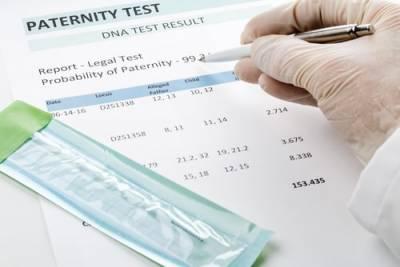 According to Illinois law, biological fathers are not automatically considered legal fathers of their children if they are not married or in a civil legal union at the time of the child’s birth. This is the case even if both parents live together or plan to marry. In other words, a father will not have grounds to pursue
